
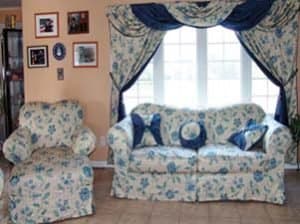
Book a visit to our shop and you'll see hundreds of fabric books, thousands of options once you count colorways. It's the best part of a custom project, and also the moment most clients freeze. Here's the framework we walk through together at the counter, so you can start thinking about it before you visit.
Start with how the piece actually gets used
Be honest about the piece's life. A formal wing chair that's sat in twice a year can wear almost anything. The family sofa where kids eat cereal and the dog naps needs a workhorse. Before you fall in love with a fabric, answer three questions:
- Who sits here, and how often?
- Do pets share the furniture?
- Is it near a window that gets strong sun?
Those three answers narrow thousands of options down to a manageable shortlist.
Understand durability ratings
Upholstery fabric is tested by rubbing it until it wears. The result is a double rub count. As a rule of thumb:
- Under 15,000 double rubs: light duty, decorative pieces, formal rooms
- 15,000-30,000: general residential use
- 30,000+: heavy daily use, family rooms, pets
- 100,000+: contract/commercial grade, restaurants and offices
We did the booth seating for local Dunkin' Donuts locations in contract-grade vinyl for a reason: it shrugs off thousands of customers a year. Your living room doesn't need that, but your everyday sofa shouldn't be dressed in a delicate silk blend either.
Know your fibers
Cotton and linen breathe well and take color beautifully, but wrinkle and absorb spills. Wool is durable and naturally stain-resistant, with a price to match. Polyester and nylon blends are the modern workhorses: durable, fade-resistant, affordable. Leather ages gracefully and cleans with a wipe, though it shows scratches. Performance fabrics (solution-dyed acrylics and engineered polyesters) are the biggest change in our industry in decades: they resist stains, sun, and pets while feeling like ordinary soft fabric. For outdoor cushions they're not optional, they're the only thing that survives a Long Island summer and the salt air near the shore.
Pattern, scale, and color
A few rules of thumb from years of seeing choices play out:
- Large patterns need large pieces. A bold floral on a small chair chops the design into confetti.
- Textured solids and small weaves hide wear and sit well in almost any room. When in doubt, put the boldness in pillows, which are cheap to redo.
- Dark colors hide stains but show lint and pet hair; light colors do the reverse. Mid-tones and mixes are the practical middle ground.
- If the room's decor changes often, keep the big piece neutral and let accessories carry the color.
Bring your own, or buy through us
Some shops only work with their own fabric lines. We're happy either way. Bring a fabric you've found, or browse our books and we'll order it for you. Buying through us means we can vouch for the fabric's suitability: clients occasionally fall in love with a drapery-weight fabric that would wear through on a seat cushion in a year, and we'd rather steer you to the upholstery-grade version of the same look.
The best way to decide: see it on the piece
Photos lie about color, and showroom lighting lies about everything. Take swatches home, drape them over the actual piece, and look at them morning and night for a few days. It's the single best predictor of whether you'll still love the choice in ten years.
Ready to start browsing? Book a showroom visit or a free consultation and bring photos of your piece and your room, and we'll pull a shortlist of books worth your time.